A BC festival that builds permanent infrastructure compounds its guest experience, operational knowledge, and cultural identity year over year. Unlike temporary event setups that reset every season, permanent stage infrastructure — like the model Shambhala Music Festival has refined over 25 years in BC’s Slocan Valley — creates a compounding return on every planning and capital decision an operator makes. Here’s what that philosophy looks like in practice, and what BC festival producers can take from it right now.
If you’ve spent any time producing or operating a BC festival, you already know the difference between an event that feels temporary and one that feels like it belongs to the land it’s built on. That gap — between a weekend setup and something that compounds year over year — is exactly what Shambhala Music Festival has spent 25 years building in the Slocan Valley. And it has lessons every BC festival operator, event producer, and live sound professional needs to hear.
This isn’t a review of Shambhala. It’s an infrastructure post-mortem — written from the perspective of someone who has spent decades running sound, staging events, and watching what separates the BC festival operations that grow from the ones that plateau.
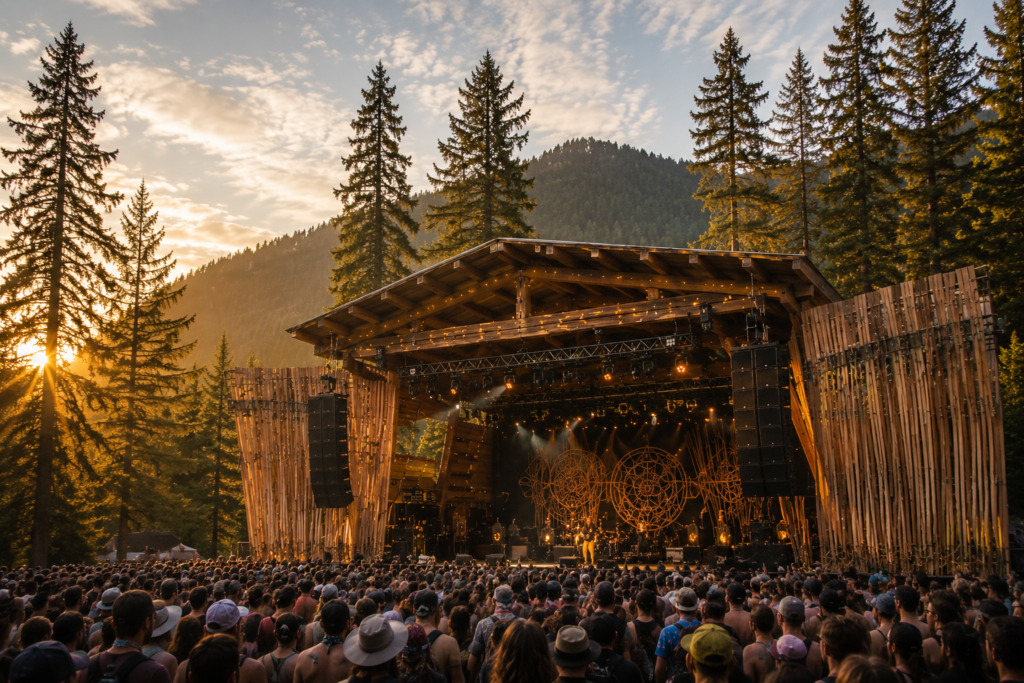
1. What Shambhala Gets Right That Most BC Festival Operators Get Wrong
Every BC festival producer faces the same core tension: build something great this year, or build something that gets better every year. Most choose the first option — not because they don’t want longevity, but because temporary infrastructure feels cheaper and safer in the short term.
Shambhala made a different bet. On a privately owned farm in the Kootenays, the team has spent over two decades building stages, sound systems, and guest flow infrastructure that doesn’t get torn down at the end of the weekend. It gets refined. It gets added to. It compounds.
The result is a BC festival experience that feels fundamentally different from anything built on a rental-and-teardown model. Attendees feel it in the ground. They feel it in the acoustics. They feel it in the flow between stages. And they come back — year after year — because the place itself has become part of the experience.
For BC festival operators working in Metro Vancouver, the Fraser Valley, or anywhere across the province, the infrastructure philosophy here is worth studying in detail.
2. Permanent Stages vs. Temporary Setups: The Capital Argument
The standard BC festival production model works like this: rent a venue, bring in temporary staging, install a sound system for the weekend, tear it down Monday morning. It’s flexible. It’s scalable. And it has a ceiling.
Permanent BC festival infrastructure operates on a completely different financial and experiential logic. When you build a stage that stays — that gets upgraded, acoustically tuned, and structurally improved season after season — you’re making a capital investment in guest experience that compounds like interest.
Why Permanent Infrastructure Changes the Guest Experience
When attendees return to a BC festival with permanent stages, they’re not just returning to an event. They’re returning to a place. That distinction matters enormously for return rates, word-of-mouth, and the kind of cultural gravity that makes a festival genuinely hard to replicate.
Shambhala’s stages — The Village, The Fractal Forest, The Grove, Living Room — are not just named areas on a site map. They’re architectural landmarks with acoustic identities. A DJ playing The Fractal Forest is playing into a specific sonic environment that has been shaped over decades. That’s not something a temporary BC festival setup can replicate in a weekend.
The Planning Horizon Shifts Completely
Temporary BC festival infrastructure requires you to re-solve the same problems every year. Where does power run? How does sound bleed between stages? Where do guest bottlenecks form at 2am? Every season, you’re answering questions you already answered last year.
Permanent infrastructure locks in those answers and lets your planning energy move forward. Year two, you’re not fixing last year’s flow problems — you’re building on top of solutions that already work. That’s a compounding return on planning investment that most BC festival operators never access because they never commit to the permanence that enables it.
3. How BC Festival Infrastructure Compounds Culture Over Time
There’s a word that keeps coming up when longtime Shambhala attendees describe the experience: layered. The festival feels layered — like it has history embedded in the physical space. That’s not an accident. It’s the direct result of infrastructure decisions made years, sometimes decades, earlier.
The Cultural Memory Embedded in Physical Space
When a BC festival builds permanent infrastructure, it gives attendees something to remember spatially, not just emotionally. They remember where they stood. They remember the shape of the stage. They remember the way sound moved through a specific clearing at 3am. Those spatial memories are anchors — they pull people back.
Temporary BC festival setups, by contrast, produce emotional memories attached to people and music, but rarely to place. The tent was different last year. The stage was in a different corner. The layout changed. There’s nothing wrong with that — but it produces a different relationship between attendee and event.
Shambhala’s infrastructure philosophy has created a BC festival where the place itself is part of the product. That’s a competitive moat that no amount of booking budget can replicate overnight.
Thinking about your own DJ journey? Download our free Beginner DJ Guide and learn the fundamentals used by working DJs.
Staff and Volunteer Institutional Knowledge
Permanent BC festival infrastructure also compounds at the operational level. When your stages, power runs, and guest flow corridors stay consistent year over year, your crew builds institutional knowledge that makes every successive event run more efficiently. Security knows the pinch points. Sound engineers know the room. Volunteers know the flow.
That accumulated operational knowledge is invisible to guests — which is exactly the point. It shows up as an event that just works, without visible effort. And that frictionless guest experience is one of the most powerful retention tools a BC festival operator can build.
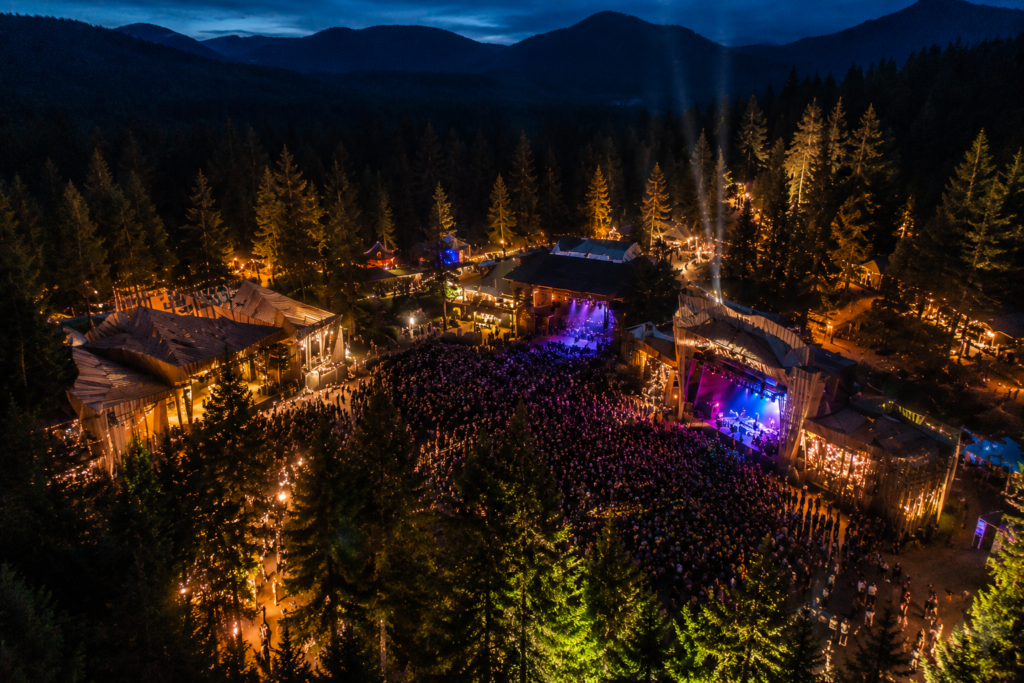
4. What the Shambhala Model Teaches Us About Long-Term BC Festival Planning
Not every BC festival operator owns their land. That’s the obvious objection to the Shambhala model — and it’s a fair one. But the infrastructure philosophy doesn’t require land ownership to be applicable. It requires a planning horizon shift.
Think in Seasons, Not Weekends
The most transferable lesson from Shambhala’s BC festival infrastructure approach is this: plan for what you’re building toward, not just what you’re executing this year. Every infrastructure decision — temporary or permanent — should be evaluated against a three to five year vision, not just this summer’s budget.
What does your BC festival’s sound infrastructure look like in year three if you make this investment now? What does guest flow look like in year five if you solve the stage proximity problem this season instead of patching it again?
According to the Canadian Live Music Association, multi-year planning is one of the most consistently cited differentiators between festivals that scale and festivals that stall. The operators who treat each season as a standalone event rarely build the kind of compounding audience loyalty that defines BC festival success at the highest level.
Private Land Enables Different Rules
One of the structural advantages Shambhala operates with is private land — and it shapes the entire guest experience in ways that go far beyond stage placement. Private land in BC means fewer municipal permit constraints, more flexibility in operational hours, and the ability to design guest experience without the interference of venue restrictions that weren’t built for festival use.
For BC festival operators working on public or leased land, this is worth naming honestly: venue choice is a guest experience decision, not just a logistics one. The rules your venue operates under become the rules your guests live inside for the weekend. That’s a production variable that deserves as much attention as your sound system or your lineup.
5. BC Festival Production Lessons You Can Apply Right Now
You don’t need 25 years or a Kootenay farm to apply these infrastructure principles. Here’s what BC festival operators and event producers can act on in the current planning cycle.
Audit Your Repeat Problems
Every BC festival has them — the loading dock that backs up every year, the stage that bleeds into the adjacent tent, the power run that trips at peak load. If you’ve solved the same problem three years in a row, it’s not an operations problem. It’s an infrastructure problem. Treat it like one.
Document Your Solutions
Permanent infrastructure starts with institutional knowledge. Start documenting your site decisions, sound solutions, and guest flow fixes in a format that survives staff turnover. The BC festival operators who build durable events are the ones whose operational knowledge lives in systems, not just in people.
Invest in Acoustic Identity
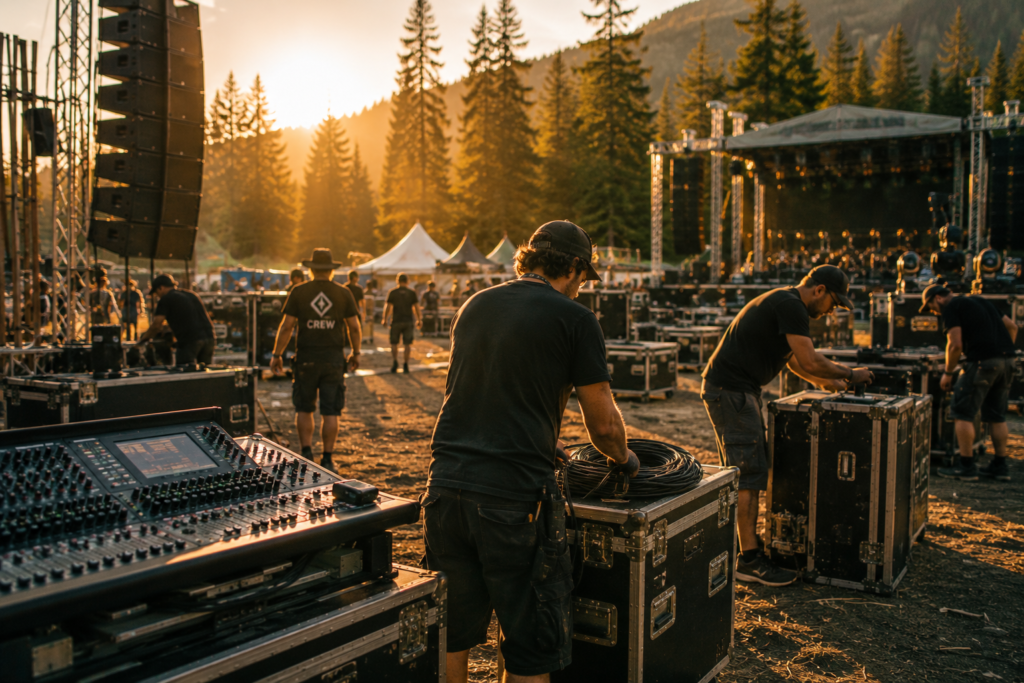
Even within a temporary BC festival setup, you can build acoustic identity into your stages. The shape of a tent, the placement of delay stacks, the angle of a stage relative to guest approach — these are infrastructure decisions that shape how a space sounds and feels. Work with your live sound provider to design rooms, not just install systems. [^internal-link-live-sound]
Build Your Venue Relationship Like Infrastructure
If you’re not on private land, your venue relationship is your infrastructure. Long-term agreements, co-investment in permanent improvements, and operational partnerships with venue management create the same compounding returns as physical infrastructure ownership — over a longer horizon.
6. The Bottom Line for Vancouver and BC Event Operators
The BC festival landscape is competitive. Audiences have more options, higher expectations, and less patience for events that feel like they’re still figuring themselves out. The operators who are pulling away from the pack share one thing: they’re building infrastructure, not just events.
Shambhala didn’t become one of Canada’s most respected music festivals because of its lineup. It became what it is because of 25 years of compounding infrastructure decisions — permanent stages, acoustic identity, operational knowledge, and a guest experience designed to deepen every season.
That philosophy is available to every BC festival operator willing to shift their planning horizon from this weekend to the next five years.
If you’re working on live sound production, stage design, or event audio for a BC festival or large-scale event and want to talk through what that kind of infrastructure investment looks like from a production standpoint — reach out to Pacific Sound Entertainment for a production consultation. We’ve been building sound infrastructure across Western Canada for over 25 years, and we know what it takes to make a room sound like it belongs there.
Frequently Asked Questions About BC Festival Infrastructure
Q. What is the biggest infrastructure mistake BC festival operators make? A: The most common BC festival infrastructure mistake is treating every season as a standalone event rather than a compounding build. When operators re-solve the same logistics, sound, and guest flow problems year after year instead of locking in permanent solutions, they burn planning budget that could be invested in growth. The festivals that scale are the ones that document solutions and build on them.
Q. How does permanent stage infrastructure improve BC festival guest experience? A: Permanent BC festival stages develop acoustic identity over time — the shape, materials, and sound treatment of a space get refined season after season. Guests return to a place they remember spatially, not just emotionally. That spatial memory is one of the strongest retention drivers a BC festival operator can build, and it’s only available through permanent or semi-permanent infrastructure investment.
Q. Do you need to own land to apply Shambhala’s BC festival infrastructure philosophy? A: No. The core principle is a planning horizon shift — thinking in three to five year cycles rather than weekend-to-weekend. BC festival operators on leased or public land can apply the same compounding logic through long-term venue agreements, documented operational systems, and acoustic design decisions that carry forward season after season.
Q. How does live sound production factor into BC festival infrastructure planning? A: Live sound is one of the most underleveraged infrastructure variables in BC festival planning. Stage placement, speaker array design, delay stack positioning, and tent or structure shape all determine how a space sounds and feels to guests. Working with an experienced live sound provider from the planning stage — not just the execution stage — is one of the highest-return infrastructure decisions a BC festival operator can make.
Incorporating live sound production into the infrastructure planning of BC festivals is essential for enhancing the overall guest experience. Strategic considerations such as stage placement, speaker array design, and the architectural shape of tents and structures play a critical role in shaping the auditory environment. Engaging an experienced live sound provider during the planning phase, rather than solely during execution, can significantly optimize sound quality and operational efficiency. By prioritizing these elements, festival operators can create a more immersive atmosphere that resonates with attendees and elevates the event’s reputation.
If our Vancouver event guides are useful, add us as a Preferred Source so fresh ones show up in your search.
If our Vancouver event guides are useful, add us as a Preferred Source so fresh ones show up in your search.