Corporate Event Planning: 6 Comfort Moves That Win Guests
Corporate event planning usually starts with the big, visible decisions: the venue, the speakers, the catering headline, the stage. But the thing guests actually remember rarely lives on that list. They remember whether they were comfortable enough to enjoy it. Comfort is not a soft afterthought. It is a production strategy, and the planners who treat it that way build events people talk about long after the lanyards come off.
We learned this from an unlikely place. A festival thread with over 250 attendees asked people what actually defined their experience, and almost nobody named the music. They named socks, fans, shade, hydration, foot soaks, a place to sit down. The lesson scales straight into corporate event planning: the small stuff drives disproportionate happiness, and the friction nobody fixed is what people remember instead of your keynote. Whether you are running a product launch downtown or a company gala at a waterfront venue, the same rule holds. Guests experience the room before they experience the program. Think of what follows as both a strategy and a practical set of corporate event planning tips you can apply to your next event.
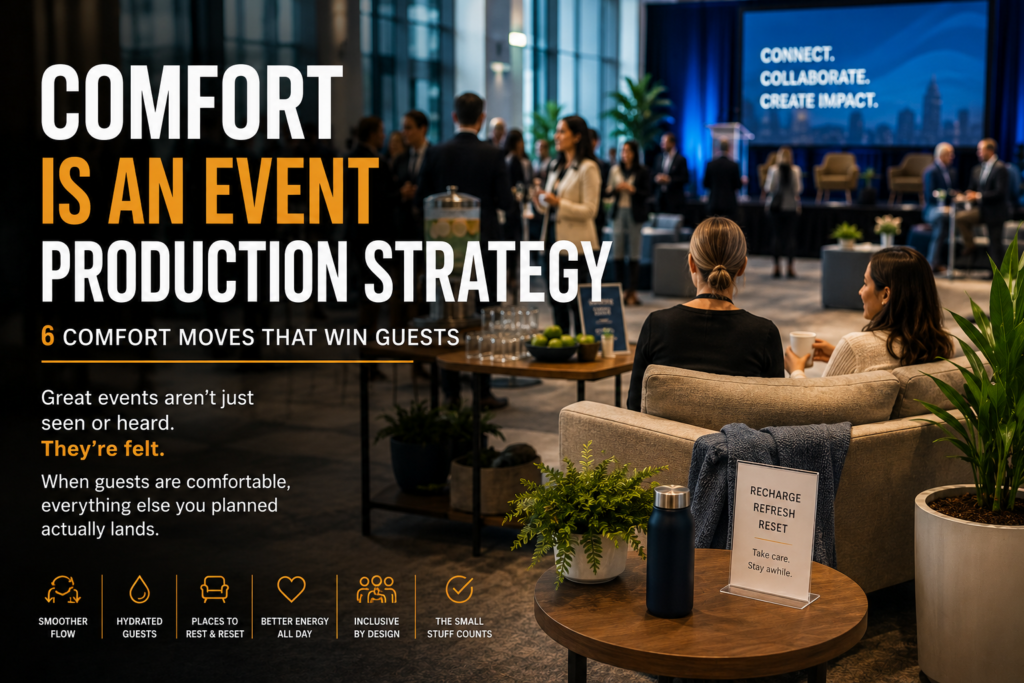
Why comfort beats spectacle
Events are increasingly judged through attendee wellbeing. Comfort, hydration, accessibility, recovery space, and the temperature of the room are becoming as important as the entertainment itself. The reason is simple. A guest who is too hot, dehydrated, stuck in a bottleneck, or standing for three hours straight cannot fully enjoy whatever you spent the budget on. Discomfort quietly overwrites the experience. Solve the friction first and everything else you planned finally lands the way you intended.
This is also where the budget psychology trips people up. Comfort is the part of an event nobody consciously notices when it is done well, so it tends to get funded last. But that is exactly backwards. The invisible layer is the one carrying the entire guest experience, and the moment it fails, it becomes the only thing anyone notices. A brilliant speaker loses the room if half the audience is fanning themselves with the agenda. A beautiful venue stops mattering if the line for coffee wraps around the lobby. Comfort is the foundation the rest of the event stands on, which is why good corporate event management starts with the guest, not the spectacle.
Clear sightlines, reachable spaces, easy navigation, and inclusive event planning help remove barriers before anyone has to ask.
6 comfort moves that work as production strategy
- Design the flow, not just the floor plan. Map how guests actually move through the space: arrival, registration, food, seating, exits. Bottlenecks create frustration that has nothing to do with your content. Good corporate event planning removes friction before guests ever feel it, so the energy of the room stays up instead of stalling at the door.
- Treat hydration and temperature as infrastructure. Water that is easy to reach, a room that is not too hot or too cold, and shade for outdoor events are not luxuries. They are the baseline that keeps energy and attention up all day. In a Vancouver summer, an outdoor corporate event without shade and water is a comfort problem waiting to happen, and guests will feel it long before they mention it.
- Build in recovery space. Every event has a peak, and people need somewhere to step out of it. A quieter lounge, a seating area away from the noise, a moment to reset. It is the same reason festivals build chill zones, and it keeps guests in the building longer instead of slipping out early to find their own quiet.
- Plan for the feet and the body. Long events are physical. Seating that is genuinely usable, breaks that are real, and a layout that does not force people to stand for hours all protect the experience you are selling. Fatigue is the silent killer of a good event, and it sets in earlier than most planners expect.
- Make accessibility a default, not a request. Clear sightlines, reachable spaces, easy navigation, and considered placement signal care to every guest and remove barriers before anyone has to ask. It reads as professionalism because it is, and it widens the room to everyone you invited rather than just the most able-bodied among them.
- Solve the small stuff visibly. The festival crowd remembered socks and fans because those tiny fixes made the day livable. The corporate equivalents are coat checks that move, signage that actually directs, charging points, and catering that flows without a twenty minute line. Small fixes, outsized payoff. Guests may not be able to name why an event felt smooth, but they will feel that it did.
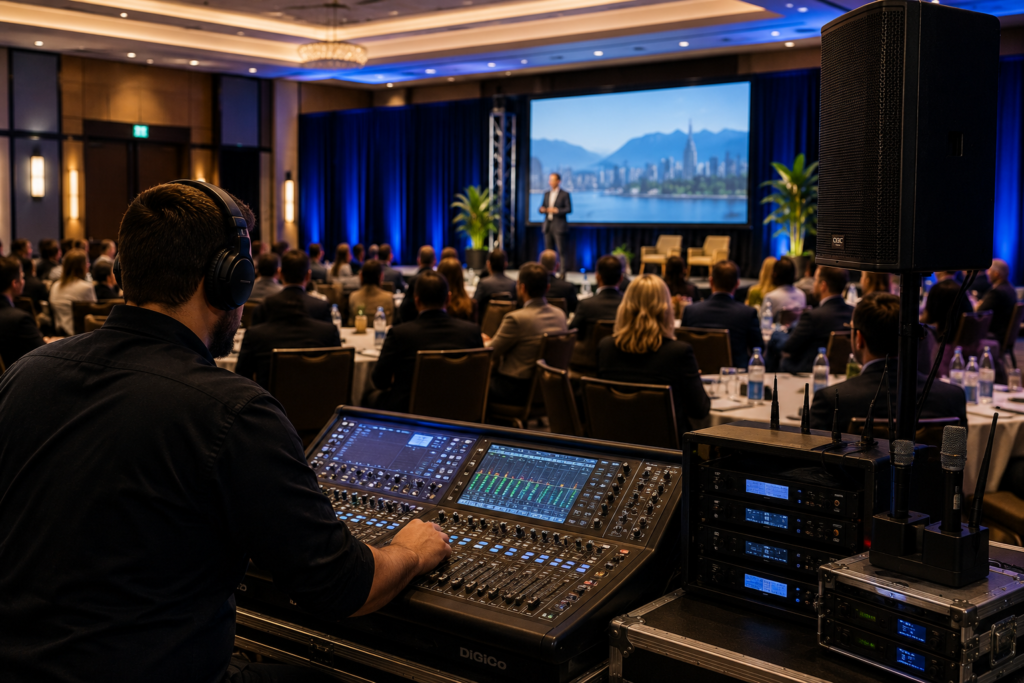
How comfort shows up in the room
When comfort is handled well, you feel it as a kind of ease. Guests stay longer, talk more, and carry better energy into the parts of the event you care about most. Conversations run deeper. Sessions stay full instead of thinning out by mid-afternoon. The networking you hoped would happen actually happens, because people are relaxed enough to linger. When comfort is handled badly, you feel that too, as restlessness, early exits, and a room that never quite warms up no matter how good the program is. None of that is about the headline act or the speaker. It is about whether someone solved the friction first.
That is the real shift. Comfort is not the thing you add at the end if there is budget left. It is a production discipline you design from the start, the same way you would plan sound, lighting, or the run of show. Build it into your corporate event planning process early, give it a line in the budget, a name on the responsibility chart, and a place in the walkthrough. The best approach to event planning corporate teams can adopt treats guest comfort as a core deliverable, because the guest experience is the product, and comfort is what makes the rest of it possible.
There is a competitive edge here too. Most event planning still leads with spectacle and treats comfort as cleanup. The producers who flip that order, who design the guest experience first and layer the spectacle on top of a comfortable foundation, end up with events that simply feel better than the competition, even when the budgets are similar. Comfort is one of the few advantages that money alone does not buy. It takes attention. Use this as your corporate event planning guide to that advantage: start with the guest, and design outward from how they will actually feel in the room.
If you are planning a corporate event in Vancouver and want it to feel as good as it looks, start with how your guests will actually experience the room. That is where the memorable events are won. Reach out with a planning question and let’s talk about building comfort into your event from the ground up.
FAQ
Q. Why is comfort important in corporate event planning?
A: Because guests judge events through their own experience. If they are too hot, dehydrated, or stuck in bottlenecks, discomfort overwrites everything you planned. Comfort is what lets the rest of the event land.
Q. Isn’t comfort just a nice-to-have, not a strategy?
A: No. Comfort is a production discipline. Flow, hydration, seating, recovery space, and accessibility directly shape how guests feel and how long they stay engaged, which makes it a core part of the result, not an extra.
Q. What are the easiest comfort wins for a corporate event?
A: Easy hydration, a well managed room temperature, genuinely usable seating, smooth catering flow, and clear signage. They are small fixes with outsized impact on how the day feels.
Q. How does comfort affect whether an event is remembered?
A: People remember friction more than features. A keynote competes with whether someone was comfortable enough to focus on it. Solve the discomfort and the memorable moments you planned actually get through.
Q. When should comfort be planned in the process?
A: From the start, alongside sound, lighting, and the run of show. Treating it as a production layer rather than a last-minute addition is what separates a smooth event from a stressful one.
If our Vancouver event guides are useful, add us as a Preferred Source so fresh ones show up in your search.
If our Vancouver event guides are useful, add us as a Preferred Source so fresh ones show up in your search.